Industrial Robotics and Industrial Controls for Precision Manufacturing
Precision manufacturing has always been an exercise in discipline. Tolerances tighten, materials get more expensive, customers demand traceability, and downtime becomes harder to absorb. In that environment, industrial robotics is not simply a labor-saving tool, and industrial controls are not just the electrical backbone tucked inside a panel. Together, they form the production logic of the factory floor. One handles motion and repeatability, the other governs sequence, safety, timing, data, and decision-making.
When these systems are designed well, a line feels almost effortless to run. Parts arrive in the right place at the right time. A robot places, welds, dispenses, or inspects with predictable accuracy. The PLC keeps sequence under control, checks permissives, manages alarms, and coordinates each asset so one station does not outrun the next. The HMI tells operators what matters without drowning them in trivia. When they are designed poorly, the opposite happens. The robot is blamed for crashes that started with bad fixturing. Operators bypass sensors because screens are confusing. A line that should run at 85 parts per hour limps along at 52 because the machine builder treated controls as an afterthought.
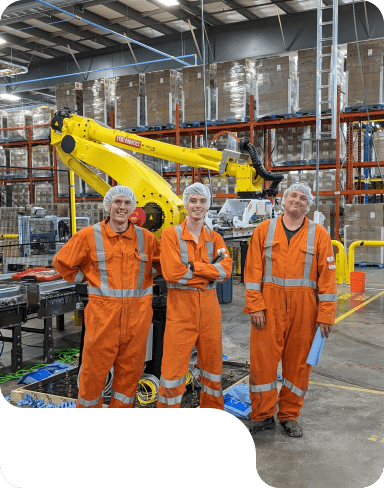
That gap between promise and reality is where most Industrial equipment supplier of the work lives.
Precision begins before the robot moves
People often talk about robot repeatability as if it guarantees part quality. It does not. A robot can hit the same point repeatedly and still produce scrap all shift if the part presentation is unstable, the tooling wears unevenly, or the control logic allows variation to creep in upstream.
A common example is automated dispensing. On paper, the application looks straightforward: pick the part, move along a path, lay a bead, place the finished part on a conveyor. In practice, the quality of the bead depends on much more than the robot arm. You need stable part location, controlled dispense pressure, verified material temperature, clean start and stop logic, and a way to catch drifts before they become rejects. If the industrial control systems managing the process only monitor cycle start and cycle complete, the line may keep running long after the process goes out of spec.
That is why precision manufacturing tends to reward integrated thinking. The robot is part of a system, not the system itself. End-of-arm tooling, vision, servo positioning, pneumatic timing, sensor placement, and software architecture all have to support the same outcome. In high-volume work, a few tenths of a second saved in robot travel may matter less than a properly debounced sensor that prevents intermittent jams. In low-volume, high-mix work, flexible HMI programming often creates more value than shaving milliseconds off motion profiles.
The best projects acknowledge those trade-offs early. They do not treat mechanical, electrical, and software disciplines like separate handoffs. They treat them as one design problem with several specialists working on different layers.
Where industrial robotics delivers the most value
Not every process benefits equally from robotics. The strongest candidates usually combine repetitive motion, quality sensitivity, ergonomic risk, or throughput pressure. Welding, machine tending, palletizing, vision-guided pick and place, screwdriving, dispensing, and precision assembly all fit the pattern. So do inspection tasks where humans struggle to stay consistent over long shifts.
What matters is not only whether a robot can perform the task, but whether it can perform it within the process window the product requires. A six-axis robot loading a CNC machine may appear easy to justify because the motion is simple and the labor market for machine operators is tight. Yet if chips collect in the fixture, if parts arrive with variable orientation, or if the gripper lacks confirmation on part presence, the automation may run beautifully during acceptance testing and fail miserably by the second week of production.
A plant manager once described a robot cell to me as "fast when watched, unreliable when owned." That sentence captures a lot of failed automation. Demonstrations often prove capability. Production exposes maintainability.
The mature approach to industrial robotics starts with the ugly details. How will the cell recover after a mispick? What happens if an upstream conveyor pauses for 17 seconds instead of 5? Can maintenance replace a prox sensor without reteaching half the cell? Does the program distinguish between a robot fault, a tooling fault, and a process fault? Those questions sound less glamorous than payload charts and reach envelopes, but they determine whether automation supports precision or simply adds complexity.
The quiet authority of PLC programming
Good PLC programming rarely gets public praise inside a plant, but everyone notices bad PLC programming. Operators see machines that require ritualistic resets. Maintenance sees cryptic fault chains. Production sees random stops that cannot be reproduced. Engineers see logic they are afraid to modify because one small change could ripple into three stations downstream.
In precision manufacturing, PLC programming is where process intent becomes executable control. It is also where line stability is won or lost. A robust program does more than switch outputs based on inputs. It enforces state, validates sequence, handles timing exceptions, manages interlocks, and keeps the machine recoverable when real life interrupts the ideal cycle.
That last part matters. Real life interrupts constantly. Parts jam. Air pressure dips. Barcode reads fail. An operator opens a guard to clear debris at the exact moment a robot requests handoff. If the control logic assumes everything happens in perfect order, the machine becomes fragile. If it is written with clear state management and fault handling, the machine can recover without requiring an engineer every time something minor goes wrong.
There is no single perfect style for PLC programming, but there are habits that separate resilient systems from brittle ones. Clear tag naming, well-defined machine states, modular routines, documented alarm logic, and explicit permissives make a measurable difference. So does discipline around timing. I have seen systems that suffered intermittent failures for months because a signal from one device was only true for 80 milliseconds, while the receiving device scanned and processed too slowly to reliably catch it. The mechanical team kept looking for vibration issues. The root cause was control timing.
When robotics enters the picture, PLC logic becomes even more critical because the robot and machine must share a common understanding of readiness. That usually includes handshakes for safe start, in-cycle status, job number confirmation, part present signals, completion acknowledgments, and faulted states. If those handshakes are vague or inconsistent, integration trouble follows. The robot may wait forever on a bit the PLC never sets, or the PLC may advance the sequence before the robot finishes a motion.
None of this is dramatic. It is simply the daily craft of industrial controls, and it is why the best controls engineers are often the ones who think most clearly under imperfect conditions.

HMI programming is where people meet the machine
A surprising amount of automation performance depends on screen design. HMI programming is often treated as the final cosmetic layer, something to finish after the real engineering is done. In production, that mindset is expensive.
The HMI is where operators, technicians, supervisors, and sometimes quality staff interact with the process. If the screens are cluttered, inconsistent, or vague, people make slower decisions. They guess. They bypass. They call for help when the machine could have guided them through recovery.
A good HMI tells the truth quickly. It shows machine state plainly. It uses alarm messages that identify the actual fault, the likely cause, and the next action. It separates critical controls from setup functions. It protects recipe changes appropriately. It avoids making users jump through six screens to answer a simple question like whether Station 3 is waiting for a part or waiting for clamp confirmation.
One packaging line I worked with had more than 120 alarms, but only about 15 mattered during normal operation. Everything else was either diagnostic detail or maintenance information. The original HMI treated all alarms the same, so operators developed alarm blindness. Once manufacturing automation syncrobotics.ca the screens were reorganized around severity, response, and station context, average recovery time dropped noticeably. Nobody changed the mechanics. The line simply became easier to understand.
That is the practical value of HMI programming. It turns machine intelligence into usable information.
The architecture behind stable industrial control systems
A line that runs one robot cell in isolation can tolerate design shortcuts that would become painful in a larger system. Once you add multiple stations, conveyors, vision, recipe handling, traceability, SCADA connections, and safety zones, architecture matters.
Industrial control systems in precision manufacturing usually need to solve four problems at once: deterministic control, safe operation, data visibility, and future maintainability. Those goals can pull in different directions. Highly customized code may optimize one cell’s performance but become difficult for plant staff to support later. Aggressive data collection may add network load or expose timing issues if done carelessly. Safety integration may reduce available motion if it is not considered early enough in layout and programming.
This is where design choices carry long shadows. Distributed I/O can simplify wiring and improve diagnostics, but only if network design is sound and device naming remains disciplined. Servo axes can improve positioning and flexibility, but they also raise the standard for commissioning and troubleshooting. Vision systems can eliminate fixtures in some applications, but they demand controlled lighting and clear fault strategies. A plant may gain flexibility with recipe-driven control, yet also increase the risk of unauthorized or poorly managed parameter changes.
A sensible architecture balances sophistication with operational reality. If the line will be maintained by a small in-house team, the controls strategy should reflect that. It is possible to engineer a system so elegantly that no one on site can support it after startup. That is not elegant at all.
Safety has to support productivity, not fight it
Safety design in automated manufacturing gets discussed in one of two unhelpful ways. Either it is reduced to checkbox compliance, or it is treated like a drag on output. In well-run plants, neither view holds up. Properly designed safety systems support productivity because they reduce uncertainty, improve fault isolation, and make intervention predictable.
Robotic cells are the clearest example. If every minor interruption requires a full cell stop and cumbersome restart, operators will resent the cell and look for workarounds. If zones are thoughtfully defined, if muting and access logic are clearly documented, and if restart sequences are intuitive, the system remains both safer and more usable.
The same principle applies to guarding, safety PLCs, safe speed, door interlocks, and e-stop strategy. The goal is not merely to stop hazardous motion. It is to stop it in a way that is understandable, diagnosable, and appropriate to the risk. Precision manufacturing benefits when people trust the machine response. Trust reduces unauthorized overrides. It also shortens recovery time after legitimate stops.

Commissioning is where theory gets audited
Every automation project looks clean in drawings and code reviews. Commissioning is where assumptions are tested against real hardware, actual tolerances, and human behavior. This phase reveals more about the quality of industrial controls than any design meeting ever will.
A few patterns show up again and again:
- Sensor placement that seemed acceptable in CAD becomes unreliable under vibration, glare, coolant mist, or part variation.
- Robot paths that looked efficient offline need revision once cable dress, fixture deflection, or safe clearances are considered.
- PLC programming that worked in simulation exposes race conditions when multiple devices respond at slightly different times.
- HMI programming that made sense to engineers confuses operators who need faster, simpler cues.
- Recovery logic that was barely discussed during design becomes one of the most important factors in actual uptime.
The plants that get through commissioning well are rarely the ones with the flashiest concepts. They are the ones that leave room for adjustment, document changes carefully, and keep the right people engaged through startup. Controls engineers, robot programmers, electricians, mechanical leads, operators, and maintenance technicians each see different failure modes. If only one group is driving final decisions, blind spots multiply.
I have seen a robot cell lose nearly 12 percent of planned uptime because no one accounted for the time required to clear occasional double-fed parts safely. The robot itself was performing exactly as designed. The weak point was a recovery method that forced the entire cell into a cumbersome reset path. A modest update to the sequence and HMI reduced that loss dramatically. Those are the kinds of improvements that rarely make it into sales brochures, but they define whether a system feels productive after six months.
Precision is increasingly tied to data, but not all data helps
Modern plants want more visibility. They want cycle times by station, fault histories, OEE, recipe traceability, quality correlations, and maintenance indicators. That is reasonable. The challenge is deciding which data is useful enough to collect, store, and act on.
Industrial control systems can generate a huge amount of information. The trap is assuming more data automatically leads to better decisions. It does not. In many cases, a focused set of high-quality signals provides more value than a sprawling dashboard built from loosely defined metrics.
For precision manufacturing, the most useful data usually sits close to process integrity. Did the torque result fall within band? Was the weld schedule correct for the job variant? Did vision confirm orientation before assembly? How long did the clamp take to achieve position compared with its normal range? Which faults cause the most lost minutes, not just the most frequent events?
That kind of detail creates leverage. It helps teams distinguish between chronic nuisance issues and true process threats. It also supports continuous improvement without forcing operators to become data clerks.
The controls layer plays a central role here. Clean tag structures, synchronized timestamps, meaningful alarm classes, and consistent machine states make downstream reporting far more credible. If the underlying signals are sloppy, the reports will be polished nonsense.
Choosing where flexibility belongs
There is a recurring tension in automation projects between making a machine flexible and making it robust. Precision manufacturing needs both, but not in equal measure everywhere.
A line that changes over every two hours may justify sophisticated recipe management, servo adjustments, vision offsets, and guided setup routines. A line that runs one product family for months may get more value from hardened tooling, simpler logic, and fewer adjustable parameters. The mistake is applying the same philosophy to every process.
Industrial robotics often invites over-flexibility because motion can be reprogrammed more easily than hardware can be rebuilt. That is useful, but it can also mask weak process design. If a part consistently arrives skewed, it may be better to fix the presentation method than to keep teaching new robot offsets. If operators regularly tweak timing values to keep a cell running, the underlying sequence or mechanics probably need attention.
Experienced teams ask a blunt question: who will own this flexibility after launch? If the answer is unclear, the system may be too configurable for its environment.
What strong automation projects tend to share
After enough installs, certain patterns become hard to ignore. Successful projects differ in scale, industry, and budget, but they usually share a few practical traits.
- The process is understood before automation is specified.
- Controls strategy is developed early, not after mechanical design is frozen.
- PLC programming and robot programming are treated as integrated work, not separate silos.
- HMI programming is tested with real users, not just engineers.
- Recovery scenarios receive as much attention as nominal cycle time.
None of those points are flashy. All of them matter.
The workforce question is more nuanced than it sounds
Automation discussions often drift into simplistic claims about replacing labor. On actual factory floors, the situation is more complex. Industrial robotics changes labor demand, but it also raises the need for technicians, controls specialists, and operators who can manage more sophisticated equipment. In many plants, the issue is not whether people disappear, but whether the work shifts from repetitive manual tasks to setup, troubleshooting, verification, and continuous improvement.
That shift has consequences for project planning. Training cannot be an afterthought. If a plant receives a high-performance robotic cell with weak documentation and minimal operator training, the technology will underperform no matter how capable it is on paper. By contrast, even a fairly modest automation system can deliver excellent results when the local team understands its sequence, alarms, maintenance points, and changeover methods.
The same principle applies to serviceability. Spare parts strategy, backup management, code version control, and clear electrical documentation are part of precision manufacturing whether people like discussing them or not. A robot with excellent repeatability is still a poor investment if a minor controls issue can stop production for eight hours because no one can diagnose the fault path.
Where the next gains usually come from
Many plants assume the next leap in performance requires buying a new robot or replacing the line. Sometimes it does. More often, the next gain comes from better use of what is already installed.
Cycle studies may show that robot motion is not the bottleneck at all. The real delay could be a conservative dwell, a fixture clamp with inconsistent response, an unnecessary confirmation step, or a cumbersome operator acknowledgment. Alarm history might reveal that a "small" sensor fault steals 40 minutes per shift because it occurs often and recovers slowly. Quality data may show that one product variant needs tighter process parameter control than the rest.
That is where industrial controls prove their long-term value. They provide the visibility and flexibility to improve the process after launch. A well-structured PLC program can be refined without destabilizing the entire line. A thoughtfully designed HMI can guide better decisions at the point of use. A robot cell with sensible handshakes and diagnostics can evolve as products change.
Precision manufacturing has never depended on one technology alone. It depends on disciplined systems that produce the same good result, over and over, under real operating conditions. Industrial robotics brings speed, consistency, and dexterity. Industrial control systems bring order, safety, coordination, and insight. When both are engineered with practical judgment, they do more than automate a task. They create a process that holds its shape under pressure, and that is what precision really demands.
Sync Robotics Inc. — Business Info (NAP)
Name: Sync Robotics Inc.Address: 2-683 Dease Rd, Kelowna, BC V1X 4A4
Phone: +1-250-753-7161
Website: https://www.syncrobotics.ca/
Email: [email protected]
Sales Email: [email protected]
Hours:
Monday: 8:00 AM – 4:30 PM
Tuesday: 8:00 AM – 4:30 PM
Wednesday: 8:00 AM – 4:30 PM
Thursday: 8:00 AM – 4:30 PM
Friday: 8:00 AM – 4:30 PM
Saturday: Closed
Sunday: Closed
Service Area: Kelowna, British Columbia and across Canada
Open-location code (Plus Code): VHWR+PQ Kelowna, British Columbia
Map/listing URL: https://maps.app.goo.gl/xwtV2wEu8ZuKH3se8
Embed iframe:
Socials (canonical https URLs):
LinkedIn: https://www.linkedin.com/company/syncrobotics/
Instagram: https://www.instagram.com/syncrobotics/
Facebook: https://www.facebook.com/syncrobotics/
https://www.syncrobotics.ca/
Sync Robotics Inc. is an industrial robot and controls integration company based in Kelowna, British Columbia.
The company designs and deploys automation solutions for manufacturing operations across Canada.
Services include industrial robotics integration, controls integration, automation system design, deployment support, and related manufacturing automation solutions.
Sync Robotics Inc. is located at 2-683 Dease Rd, Kelowna, BC V1X 4A4.
To contact Sync Robotics Inc., call +1-250-753-7161 or email [email protected].
For sales inquiries, email [email protected].
Hours listed are Monday to Friday 8:00 AM–4:30 PM, with Saturday and Sunday closed.
For directions and listing details, use the map listing: https://maps.app.goo.gl/xwtV2wEu8ZuKH3se8
Popular Questions About Sync Robotics Inc.
What does Sync Robotics Inc. do?Sync Robotics Inc. designs and deploys industrial robot and controls integration solutions for manufacturing operations.
Where is Sync Robotics Inc. located?
Sync Robotics Inc. is located at 2-683 Dease Rd, Kelowna, BC V1X 4A4.
Does Sync Robotics Inc. serve clients outside Kelowna?
Yes—Sync Robotics Inc. is based in Kelowna, British Columbia and serves clients across Canada.
What are Sync Robotics Inc.’s hours?
Monday–Friday: 8:00 AM–4:30 PM; Saturday and Sunday closed.
How can I contact Sync Robotics Inc.?
Phone: +1-250-753-7161
General Email: [email protected]
Sales Email: [email protected]
Website: https://www.syncrobotics.ca/
Map: https://maps.app.goo.gl/xwtV2wEu8ZuKH3se8
LinkedIn: https://www.linkedin.com/company/syncrobotics/
Instagram: https://www.instagram.com/syncrobotics/
Facebook: https://www.facebook.com/syncrobotics/
Landmarks Near Kelowna, BC
1) Kelowna International Airport2) UBC Okanagan
3) Rutland
4) Orchard Park Shopping Centre
5) Mission Creek Regional Park
6) Downtown Kelowna
7) Waterfront Park